All-in-One CRM and SEO Software for Small Service Businesses & Clinics: 2026–2027 Integration Guide
📊 Key Facts
- Separate CRM and SEO tools create data gaps, duplicated effort, and missed leads for service businesses.
- Integrated all-in-one platforms use AI-powered automation built specifically for service verticals in 2026–2027.
- Service businesses need different CRM models than generic ones: recurring appointments, regulated data, local search dependency.
- Standalone SEO tools lack visibility into which organic leads actually booked or became repeat clients.
- Businesses combining CRM and SEO integration are pulling ahead of competitors using patchwork tool approaches.
If you run a clinic, a home service company, or any appointment-driven business, you already know the pain: your CRM sits in one tab, your SEO tool sits in another, your leads fall through the cracks between them, and by Friday you are not sure which channel actually brought in paying clients this week.
That disconnect is not just inconvenient — it is expensive. In 2026–2027, the businesses pulling ahead are the ones that have replaced that patchwork with all-in-one CRM and SEO software built specifically for small service businesses and clinics. This guide gives you an honest, practical look at what that integration delivers, what it does not, and how to choose a platform that matches how your business actually operates.
---
Why Service Businesses and Clinics Have Different CRM + SEO Needs
A generic small business CRM is designed for deal pipelines. A dental clinic, a physiotherapy practice, or a home services contractor has a fundamentally different model: recurring appointments, regulated patient or client data, local search dependency, and reputation built on reviews and referrals.
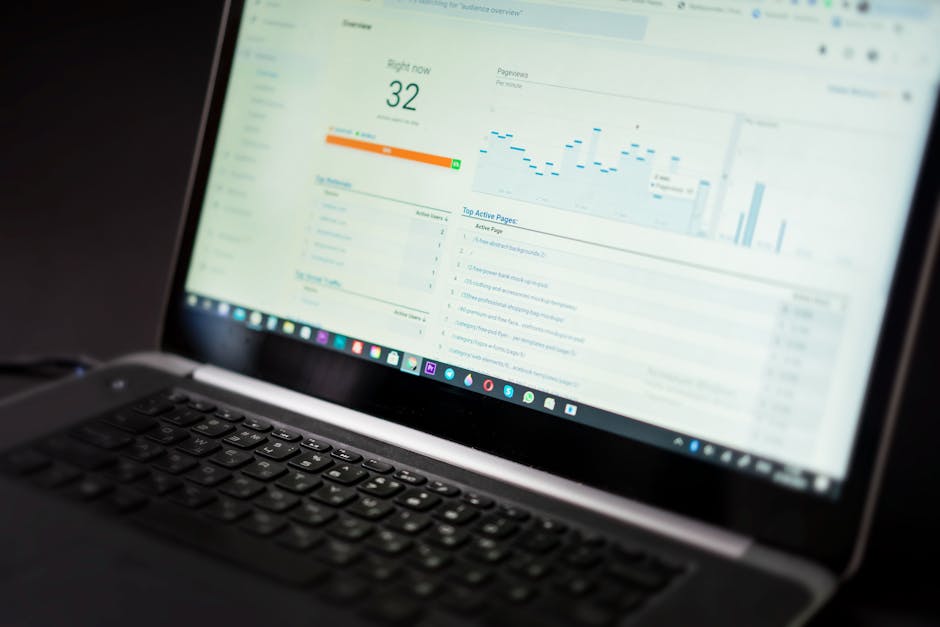
Standalone SEO tools like Ahrefs or Semrush give you keyword data but have no visibility into which leads from organic search actually booked, showed up, or became repeat clients. A standalone CRM like HubSpot or Zoho tracks contacts but cannot tell you whether your Google Business Profile is converting, or whether your suburb-level service pages are ranking.
The result: you make decisions from incomplete data, and your team wastes hours manually syncing information between systems that should be talking to each other automatically.
LeadOS was built specifically to close this gap. Founded in Australia by M. Faisal after he experienced this fragmentation firsthand as a business owner — missing leads, slow follow-ups, no single view of what was working — the platform was designed from the ground up to handle conversations, bookings, SEO visibility, and lead automation inside one system. The principle behind it is straightforward: a business owner should not need five subscriptions and a developer to run a tight operation.
---
Core CRM Functionality That Actually Matters for Service Businesses
Before evaluating the SEO layer, the CRM foundation has to work for your specific workflow. For clinics and service businesses, that means:
Contact and patient/client management — storing conversation history, appointment records, and communication preferences in one place, not spread across email, SMS, and a separate booking system.
Appointment scheduling and pipeline tracking — a visual pipeline is useful only if it maps to your actual service stages: inquiry → booked → completed → follow-up → rebooked. Most generic CRMs require heavy customisation to reflect this. Purpose-built platforms for service businesses wire this in by default.
Automated follow-up sequences — when a lead fills out your contact form at 9 PM, the response speed in the next 5–15 minutes determines whether they book with you or your competitor. AI-driven follow-up automation handles that initial response, but it is important to be clear: the automation starts the conversation; a human still needs to review and manage complex client queries, especially in healthcare contexts where clinical judgment is never replaceable by software.
For a deeper look at how automated booking specifically saves time for service businesses, see: Automated Appointment Booking CRM: How Australian Service Businesses Are Saving Hours Every Week
---
Built-In SEO Automation: What It Is and What It Is Not
This is where most all-in-one platforms either overpromise or underpromision. SEO automation inside a CRM is fundamentally different from a standalone SEO suite — and understanding the difference helps you set realistic expectations.
What integrated SEO automation does well:
What integrated SEO automation does not replace:
For businesses operating in competitive markets like the UAE or Australia, this kind of integrated local SEO approach is increasingly the difference between appearing in the local pack and being invisible. See: Auto SEO for Businesses: How AI CRM Tools Like LeadOS Are Changing the Game in Australia and Auto SEO for Business in UAE and Saudi Arabia: How AI CRM Is Changing the Game for Service Companies
---
AI-Powered Features: Realistic Use Cases for Clinics and Service Businesses
AI in CRM platforms in 2026–2027 is useful — but the marketing often outruns the reality. Here is an honest breakdown:
Lead scoring — AI can analyse inquiry patterns, response times, and service type to flag which inbound leads are most likely to book. This is genuinely useful for prioritising follow-up when your front desk is busy. It is not infallible; human review of flagged leads remains important.
Email and SMS automation — Multi-step nurture sequences based on where a contact sits in the pipeline reduce the manual workload significantly. A clinic can automate appointment reminders, post-visit check-ins, and re-engagement sequences for lapsed clients. These still require periodic review to ensure messaging stays accurate and compliant.
Missed call recovery — One of the highest-value AI automations for service businesses. When a call goes unanswered, an automated SMS fires within seconds keeping that lead engaged. See: Missed Call Lead Recovery Software for Service Businesses
Conversation AI for initial triage — AI can handle initial inquiry responses across SMS, email, and web chat, gathering service type, location, and availability before routing to a human. For clinics specifically, this triage must be monitored carefully — AI should never make clinical recommendations or handle sensitive health disclosures without human oversight.
For contractor and trade service businesses, the AI application looks slightly different: AI CRM Software for Contractors: Grow Your Business
---
Integrated vs. Point Solutions: The True Cost Comparison
The conversation usually starts with: "We already have Zoho for CRM and Semrush for SEO — why would we switch?"
Here is what that stack actually costs a small service business with 3–10 staff in 2026–2027:
| Category | Separate Tools | Integrated Platform | |---|---|---| | Monthly software cost | $300–$700+ (CRM + SEO + booking + email tool) | $150–$350 (single platform) | | Data sync maintenance | 3–5 hrs/month manual or Zapier setup | Native — zero maintenance | | Lead attribution accuracy | Partial (manual cross-referencing) | Full pipeline-to-source visibility | | Staff training overhead | Multiple platforms, multiple logins | Single interface | | Implementation time | 4–10 weeks across tools | 1–3 weeks for a single platform |
The hidden costs in the separate-tool model are data gaps and implementation drag. When your SEO tool cannot see which keywords produced booked appointments, your marketing decisions are built on incomplete signals.
---
Implementation Reality: What Small Service Teams Should Expect
Onboarding a combined CRM + SEO platform is not a weekend project, but it is manageable for a team of one to ten people with realistic expectations:
For healthcare-adjacent businesses, add time for reviewing automated messaging against your compliance obligations. The platform handles the mechanics; your team is responsible for what the messages say and ensuring no communication crosses into clinical advice territory.
---
Compliance and Privacy: What Clinics Must Know
This is the area where generic all-in-one tools most often fall short for clinics and medical service businesses.
Key considerations by market:
No software platform can guarantee compliance — compliance is an organisational responsibility. A well-designed platform provides the controls; your team and legal advisors determine how those controls are configured and enforced.
For a deeper look at how AI CRM is transforming clinic operations in regulated markets: AI for Clinic UAE and GCC: How Smart CRM Is Revolutionising Healthcare Business Growth
---
Pricing Transparency and ROI Expectations
ROI from an integrated CRM + SEO platform for a small service business typically comes from four areas:
1. Reduced tool spend — consolidating 4–5 subscriptions into one 2. Recovered leads — faster response times from automation capturing inquiries that would otherwise go cold 3. Increased rebooking rates — automated follow-up sequences keeping past clients engaged 4. Improved local search visibility — consistent local SEO driving more organic inquiries over 3–6 months
Realistic timelines: CRM efficiency gains are visible within 30–60 days. SEO impact from local automation typically shows measurable movement in 90–180 days, depending on market competitiveness. Anyone promising faster organic results without qualifications should be treated with scepticism.
For SMS and email channel-specific ROI in service markets: SMS Email CRM for Services: Grow Your Business in UAE
---
Scalability: From Solo Practitioner to Multi-Location
One of the legitimate advantages of a purpose-built platform over assembled point solutions is that scaling does not require rebuilding your tech stack. Adding a second clinic location, a new service category, or a new geographic market in a well-designed integrated system means extending existing pipelines and local SEO configurations — not starting from scratch.
That said, scalability has infrastructure limits at every price point. A platform built for a five-person team will require a different tier or configuration to support a 50-person multi-site operation. Evaluate what your growth trajectory realistically looks like over 24 months and confirm the platform's pricing and architecture can support it before committing.
For home service business operators specifically: The Best CRM for Home Service Businesses in Australia (And Why AI Makes All the Difference)
---
How to Evaluate Any All-in-One CRM + SEO Platform
Before signing up for any integrated platform, work through this checklist:
---
The Bottom Line
For clinics, home service businesses, and appointment-driven companies in 2026–2027, the fragmented tool stack is a competitive disadvantage. An all-in-one CRM and SEO software platform built for your vertical — not adapted from a generic sales tool — reduces operational overhead, closes the data gap between marketing and revenue, and gives you a clearer picture of what is actually driving growth.
The honest caveat: no platform automates away the need for human judgment. The best integrated systems handle the mechanics so your team can focus on the work that actually requires expertise — delivering the service, managing complex client relationships, and making strategic decisions that no algorithm should be making for you.
LeadOS was built on exactly that principle: give business owners the infrastructure to run tighter operations, without pretending software replaces the people running the business.
For a broader view of how AI CRM is reshaping service businesses across the GCC: AI CRM for Service Businesses GCC: 2024 Guide