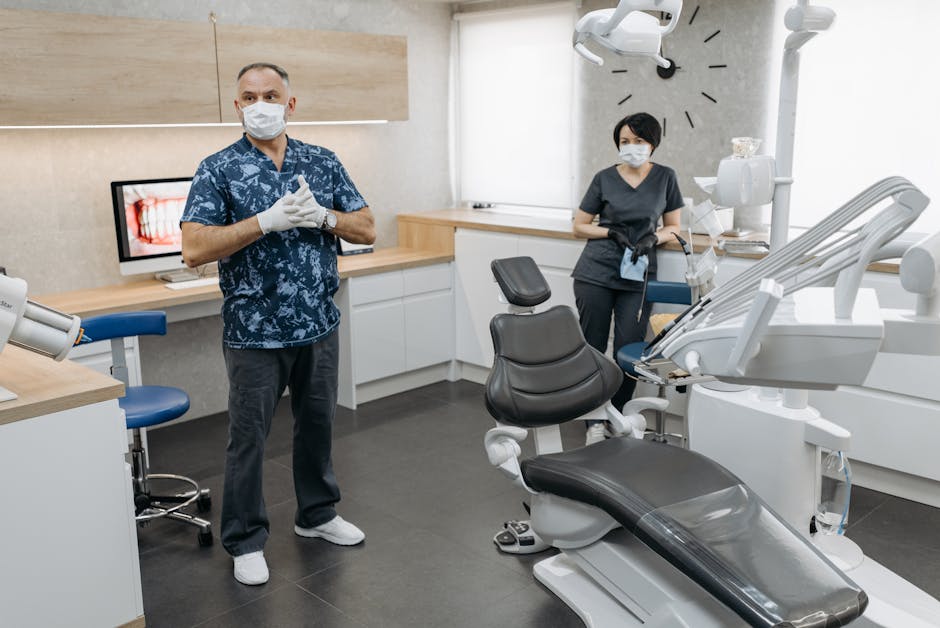
Best CRM for Dental Clinic UAE 2026–2027: NABIDH Compliance, AI Automation & ROI
📊 Key Facts
- NABIDH compliance is mandatory for Dubai dental clinics, not optional
- High real-estate costs and multilingual patients make UAE dental markets highly competitive
- Generic CRM guides insufficient; UAE clinics need specialized decision framework
- Patient records must integrate with unified EMR or remain non-contradictory
- CRM choice is financial liability, not just operational convenience for clinics
Dubai and Abu Dhabi are home to some of the most competitive dental markets in the world. High real-estate costs, a multilingual patient base, and mandatory regulatory alignment with NABIDH mean that choosing the wrong CRM is not just an operational inconvenience — it is a financial liability. Yet most guides online treat this decision as a simple feature checklist.
This article gives you something more useful: a decision framework grounded in the operational realities of UAE dental practice.
---
Why Generic CRM Advice Falls Short for UAE Dental Clinics
Most CRM comparison articles are written for a generic Western SMB audience. They score tools on contact management and pipeline tracking — useful features, but insufficient when your clinic must comply with the Dubai Health Authority (DHA) and the National Unified Medical Records (NABIDH) framework.
NABIDH is not optional. The DHA mandates that licensed healthcare facilities in Dubai integrate with the NABIDH platform to share and retrieve patient health records across the emirate's healthcare ecosystem. For dental clinics, this has direct CRM implications:
> Important: No CRM vendor should be assumed NABIDH-compliant without verification. When evaluating any platform — including those mentioned in this article — ask the vendor directly for their DHA integration documentation or audit trail capability. Treat marketing claims as a starting point, not a guarantee.
---

The Core Decision: Specialized Dental CRM vs. Flexible AI CRM
This is the most important strategic question clinic owners face, and it has no universal answer.
Specialized Dental CRM Platforms
Platforms like Dentrix, CareStack, Remedico, and Yolo System are built specifically for dental workflows. They typically offer:
CareStack in particular has gained traction in the MENA region for multi-site dental groups. Remedico is a newer entrant positioning itself for growth-stage clinics. Yolo System and Zarina CRM are frequently mentioned in GCC dental circles, though their NABIDH integration status should be independently verified before onboarding.
Trade-off: Specialized dental CRMs are deep but often rigid. They tend to be expensive per-seat, slow to adopt new communication channels (WhatsApp, for example, was an afterthought for most legacy systems), and poorly equipped for the marketing and lead management side of running a modern UAE clinic.
Flexible AI CRM + Practice Management Integration
An alternative architecture separates clinical operations (handled by dedicated practice management software) from patient acquisition, communication, and retention (handled by an AI-powered CRM like LeadOS).
This is the model that many growth-focused UAE clinics are moving toward — and it reflects a broader trend across the GCC healthcare sector. When LeadOS founder M. Faisal built the platform, the core problem he was solving was precisely this gap: leads falling through the cracks, follow-ups happening too late, and no single system connecting the full patient journey from first enquiry to booked appointment. That operational frustration resonates directly with what Dubai dental clinic owners describe.
LeadOS is not a clinical documentation tool. It is designed to handle everything before and around the clinical encounter: lead capture, AI-powered conversation management, appointment booking automation, WhatsApp and SMS follow-up, and patient retention workflows.
For dental clinics evaluating this hybrid model, the relevant internal resource is the AI CRM with WhatsApp for Clinics UAE: 2026-2027 Guide, which covers how UAE clinics are using WhatsApp-integrated CRM workflows to reduce missed enquiries.
---
Feature-by-Feature Analysis: What Actually Matters for UAE Dental Clinics
1. NABIDH Compliance Infrastructure
Any CRM storing or transmitting patient data in Dubai must be evaluated against NABIDH requirements. Ask vendors:
Platforms like DenGro (UK-focused) and Trackable (dental marketing analytics) were not designed for UAE regulatory environments and require careful legal review before deployment in a DHA-licensed facility.
2. WhatsApp and Multilingual Communication
In the UAE, WhatsApp is not a nice-to-have — it is the primary channel through which patients communicate. Any CRM without native or deeply integrated WhatsApp Business API support is operating at a structural disadvantage in this market.
Additionally, Dubai's patient base communicates in Arabic, English, Hindi, Tagalog, and other languages. A CRM that supports Arabic-language templates and right-to-left (RTL) interface elements will have meaningfully better adoption among Arabic-speaking staff and patients.
See the Lead Management CRM for Clinics GCC 2026: Full Guide for a deeper look at how multilingual communication affects lead conversion rates in the GCC.
3. Appointment Automation and No-Show Reduction
No-shows are a revenue and efficiency problem for every dental clinic, but the financial impact is amplified in Dubai where chair costs are exceptionally high. Automated reminder sequences — triggered at 48 hours, 24 hours, and 2 hours before appointment — are now table stakes. AI-powered systems go further by:
For clinics evaluating the ROI of AI-powered scheduling automation, the Best AI CRM for Clinics 2026–2027: HIPAA, ROI & No-Show Reduction article provides a useful framework — even though it references HIPAA, the operational logic translates directly to UAE clinical environments.
4. Lead Management and Patient Acquisition
Dental clinics in Dubai invest heavily in Google Ads, Instagram campaigns, and referral programs. If your CRM cannot attribute leads to source, track them through the enquiry-to-appointment funnel, and trigger follow-up automatically, you are leaving money on the table.
This is an area where specialized dental CRMs consistently underperform. Their lead management capabilities are often limited to basic contact records. A platform built for lead management — with pipeline tracking, automated follow-up sequences, and source attribution — will deliver materially better ROI on your marketing spend.
The Best CRM System to Track Leads in 2026-2027: Clinics & Service Businesses covers this in detail.
5. AI-Powered Features: What's Real vs. Marketing Language
Every CRM vendor in 2026 claims AI capabilities. Here is how to evaluate what is genuine:
For a broader analysis of how AI CRM implementation works in clinical settings, the AI CRM for Clinics & Service Businesses 2026–2027: Implementation, Compliance & ROI Guide is worth reviewing before any procurement decision.
---
Implementation Reality Check for Dubai Dental Clinics
Timeline
A realistic implementation timeline for a mid-sized Dubai dental clinic (3–8 chairs, 5–15 staff) looks like this:
Hidden Costs to Budget For
Vendors rarely surface all costs upfront. In the UAE context, watch for:
Multi-Clinic and Franchise Considerations
If you operate or plan to operate multiple locations across Dubai or Abu Dhabi, your CRM must support centralized reporting with location-level visibility. Not all platforms handle this cleanly. Test multi-location dashboards explicitly during your trial period.
---
Decision Framework: Which CRM Model Fits Your Clinic?
| Clinic Profile | Recommended Approach | |---|---| | Single-site, growth-stage, heavy digital marketing | AI CRM (LeadOS or similar) + lightweight practice management | | Established single-site, insurance-heavy workflow | Specialized dental CRM with strong insurance module | | Multi-site group, complex clinical operations | Hybrid: enterprise practice management + AI CRM for lead/comms layer | | New clinic, budget-conscious, tech-savvy operator | AI CRM with WhatsApp-first approach; migrate to hybrid as volume grows |
For clinics closer to the growth-stage profile, the AI CRM for Service Businesses UAE 2026–2027: Automate Dispatch & Lead Management article provides context on how UAE service businesses — including clinics — are structuring their CRM stacks.
---
Key Questions to Ask Any CRM Vendor Before Signing
1. Can you provide documentation of your NABIDH integration or DHA compliance approach? 2. Is your WhatsApp Business API integration native, or does it require a third-party connector? 3. Do you support Arabic-language templates and RTL interfaces? 4. What is your data residency policy — is patient data stored within the UAE? 5. What does your implementation include, and what is billed separately? 6. Can you show me a live demo of AI automation for appointment reminders and lead follow-up? 7. How do you handle the integration with our existing practice management system?
Vendors who cannot answer questions 1 and 4 clearly should be treated with caution regardless of how strong their feature set appears.
---
Final Perspective
There is no single best CRM for every dental clinic in the UAE. The right answer depends on your clinic's size, clinical complexity, marketing maturity, and growth trajectory.
What is consistent across high-performing Dubai dental clinics in 2026–2027 is this: they treat patient acquisition and patient experience as a system, not a series of disconnected tools. They have WhatsApp automation that works. They are not losing leads because no one followed up. And they are not flying blind on which marketing channels are actually filling chairs.
If your current setup has any of those gaps, the conversation about CRM is worth having — and the AI CRM with WhatsApp for Clinics UAE: 2026-2027 Guide is a practical starting point.
---
Regulatory information in this article references the Dubai Health Authority (DHA) and the NABIDH (National Unified Medical Records) framework as publicly documented. Clinic operators should verify current compliance requirements directly with the DHA or a qualified UAE healthcare legal advisor before making technology procurement decisions.